Restaurant-Quality Mango Habanero Salmon in Just 30 Minutes
Ingredients
- 4 (6-ounce) salmon fillets, skin on or off
- 1 ripe mango, peeled and diced
- 1 habanero pepper, seeded and minced (use gloves!)
- 1/4 cup red onion, finely chopped
- 2 cloves garlic, minced
- 1/4 cup lime juice, fresh
- 2 tablespoons olive oil
- 1 tablespoon honey or maple syrup
- 1/2 teaspoon ground cumin
- 1/4 teaspoon salt
- 1/4 teaspoon black pepper
- Fresh cilantro, chopped (for garnish)
Step-by-Step
1. Preheat your oven to 400°F (200°C). Line a baking sheet with parchment paper.
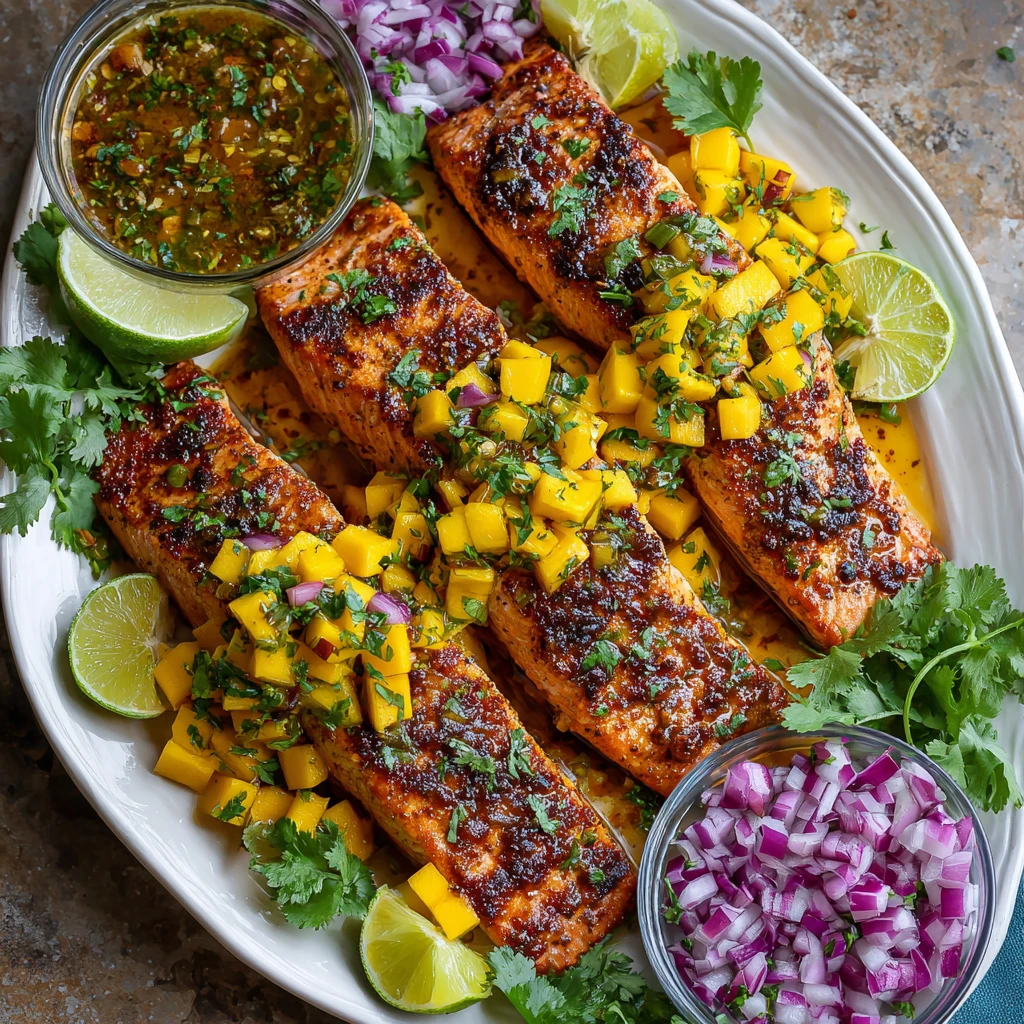
2. In a medium bowl, combine the diced mango, minced habanero, red onion, garlic, lime juice, olive oil, honey, cumin, salt, and pepper. This is your mango habanero salsa.
3. Place the salmon fillets on the prepared baking sheet.
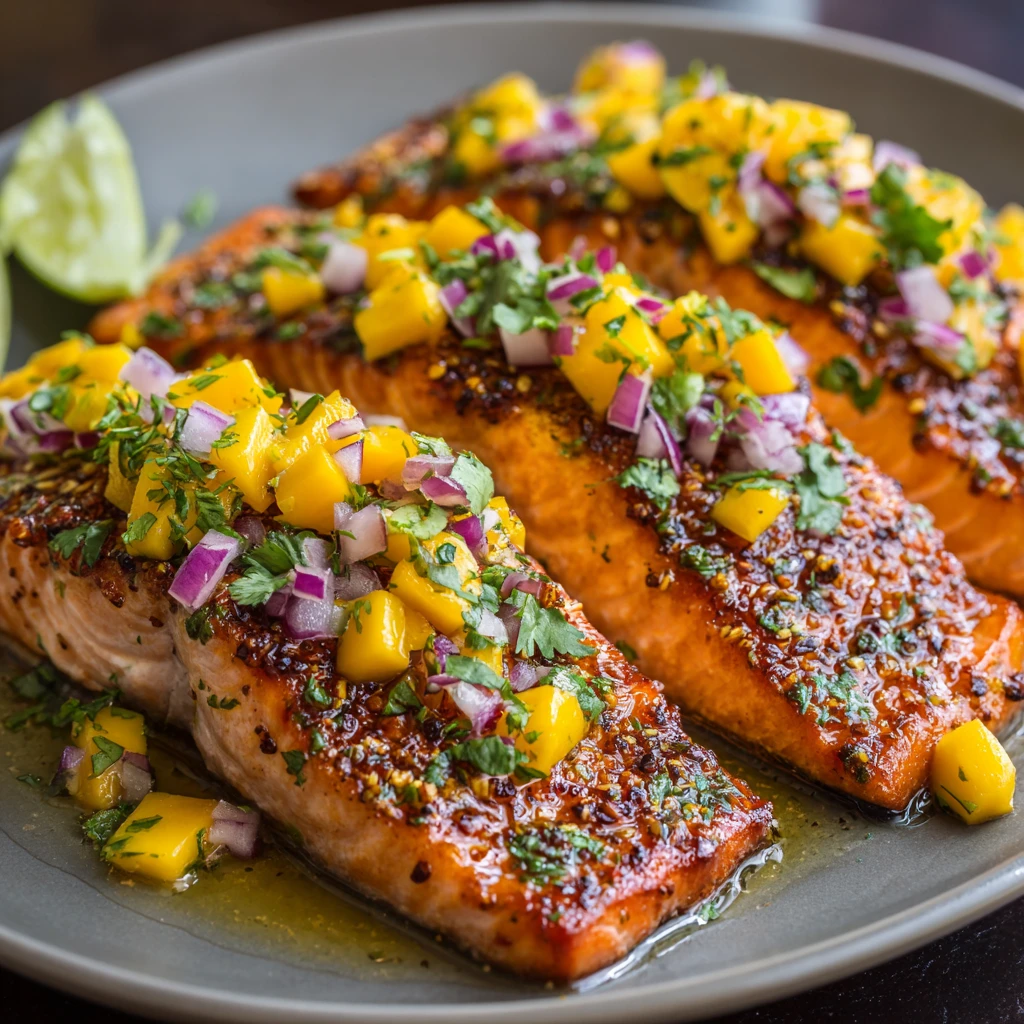
4. Spoon the mango habanero salsa evenly over the salmon fillets, ensuring each fillet is well coated.
5. Bake for 12-15 minutes, or until the salmon is cooked through and flakes easily with a fork. Cooking time will vary depending on the thickness of the salmon.
6. Garnish with fresh cilantro before serving.
7. Serve immediately with your favorite sides, such as rice, quinoa, or roasted vegetables.
The Perfect Salmon Selection
Choosing the right salmon is critical.
H3: Wild-Caught vs. Farmed
Wild-caught salmon is often prized for its richer flavor and higher omega-3 fatty acid content. However, it can be more expensive and less readily available.
Farmed salmon is a more budget-friendly option. Look for sustainably farmed varieties. These farms often follow better environmental practices.
H3: Freshness Matters
When buying fresh salmon, look for bright, vibrant color. The flesh should be firm and spring back when touched.
Avoid salmon with a strong, fishy odor or dull, slimy appearance. These are signs of spoilage.
H3: Skin On or Off?
The choice is yours! Leaving the skin on helps retain moisture during cooking.
It also adds a crispy texture if cooked properly. Removing the skin before cooking is perfectly acceptable.
Crafting the Mango Habanero Salsa
This salsa is the star of the show.
H3: Taming the Heat
Habaneros pack a punch! Remove the seeds and membranes for less heat.
Handle habaneros with gloves. Even small amounts can irritate your skin.
H3: Mango Matters
Use a ripe, but firm mango. Overripe mangoes will make the salsa too mushy.
Dice the mango into small, even pieces for a consistent texture.
H3: Balancing the Flavors
The key to a great salsa is balance. Adjust the lime juice and honey to your taste.
Add more cumin for an earthy note. Increase the habanero for extra heat.
Sides to Complement Your Salmon
Complete your meal with these delicious sides.
H3: Rice and Grains
Fluffy white rice is a classic pairing. Quinoa offers a nutty flavor and extra protein.
Consider coconut rice for a tropical twist. Its subtle sweetness complements the salmon.
H3: Roasted Vegetables
Asparagus, broccoli, and bell peppers roast beautifully. Toss them with olive oil, salt, and pepper.
Roast them alongside the salmon for easy cleanup.
H3: Salads
A simple green salad provides a refreshing contrast. Add avocado for creamy richness.
Consider a black bean and corn salad for a Southwestern flair.
Cooking Techniques for Salmon Perfection
Master these techniques for guaranteed success.
H3: Oven Temperature
400°F (200°C) is ideal for baking salmon. It cooks the fish evenly without drying it out.
Adjust the cooking time based on the thickness of your fillets.
H3: Doneness Check
Salmon is done when it flakes easily with a fork. Insert the fork at the thickest part of the fillet.
The internal temperature should reach 145°F (63°C).
H3: Avoiding Dry Salmon
Overcooked salmon is dry and unappetizing. Keep a close eye on it.
The salsa helps keep the salmon moist during cooking.
Health Benefits of Salmon
Enjoy deliciousness and reap the rewards.
H3: Omega-3 Fatty Acids
Salmon is an excellent source of omega-3 fatty acids. These are essential for brain and heart health.
Omega-3s can help reduce inflammation and improve mood.
H3: Protein Powerhouse
Salmon is packed with protein. Protein is crucial for building and repairing tissues.
It also helps you feel full and satisfied after a meal.
H3: Vitamin D
Salmon is a good source of vitamin D. Vitamin D is important for bone health and immune function.
Many people are deficient in vitamin D, making salmon a valuable addition to their diet.
FAQ
Q: Can I use frozen salmon?
A: Yes, you can. Thaw it completely before cooking. Pat it dry with paper towels to remove excess moisture.
Q: How long does leftover salmon last?
A: Leftover salmon can be stored in the refrigerator for up to 3 days. Reheat it gently in the oven or microwave.
Q: Can I grill the salmon instead of baking it?
A: Absolutely! Grill the salmon over medium heat for 4-5 minutes per side, or until cooked through.
Q: Can I make the salsa ahead of time?
A: Yes, the salsa can be made up to a day in advance. Store it in an airtight container in the refrigerator.
Q: Can I use a different type of pepper?
A: Yes, you can substitute with jalapeño, serrano, or any pepper you like. Adjust the amount to your preferred spice level.