Restaurant-Quality Mango Habanero Salmon in Just 30 Minutes
Ingredients
- 4 (6-ounce) salmon fillets, skin on or off
- 1 ripe mango, peeled and diced
- 1 red bell pepper, diced
- 1/2 red onion, finely chopped
- 1 habanero pepper, seeded and minced (use gloves!)
- 2 cloves garlic, minced
- 1/4 cup lime juice, freshly squeezed
- 2 tablespoons olive oil
- 1 tablespoon honey or maple syrup
- 1 teaspoon ground cumin
- 1/2 teaspoon chili powder
- 1/4 teaspoon sea salt, or to taste
- 1/4 teaspoon black pepper, freshly ground
- Fresh cilantro, chopped, for garnish
- Lime wedges, for serving
Step-by-Step
1. Preheat your oven to 400°F (200°C). Line a baking sheet with parchment paper.
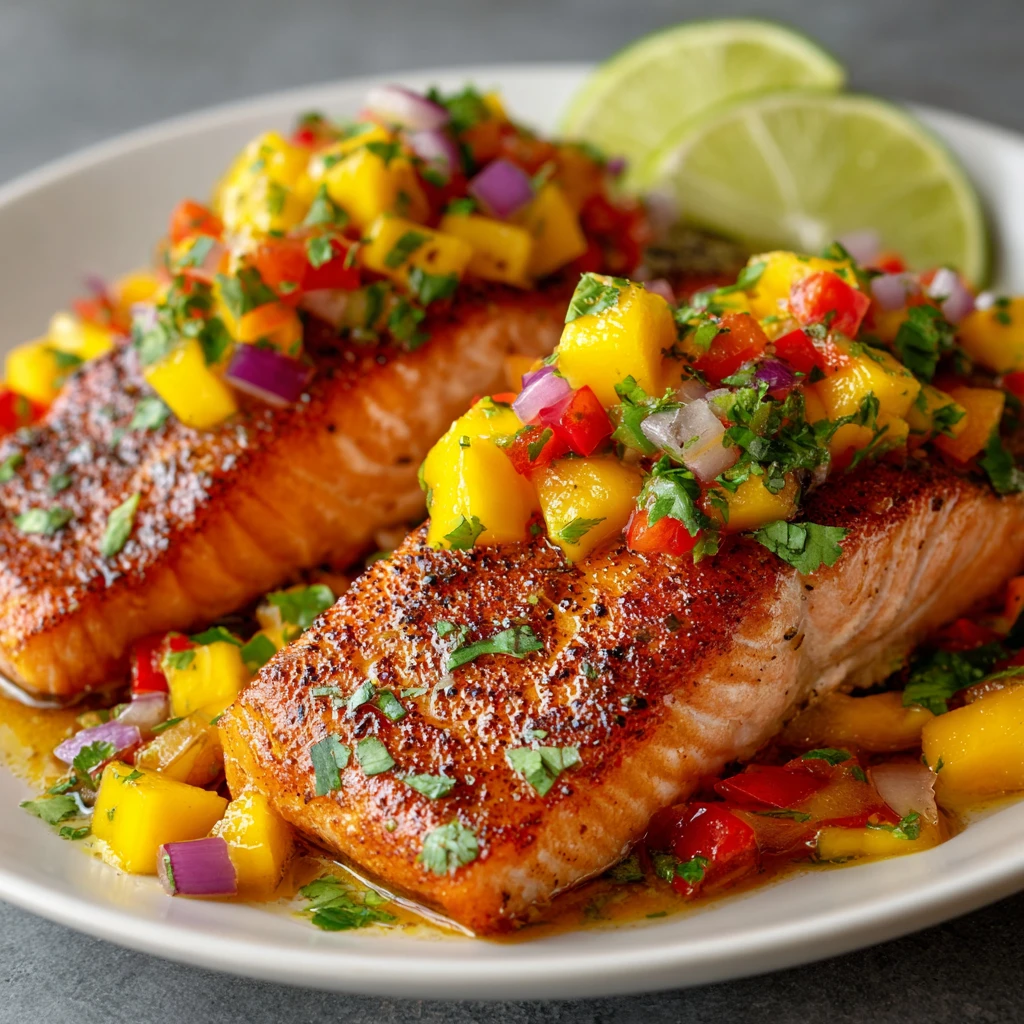
2. Prepare the mango habanero salsa. In a medium bowl, combine the diced mango, red bell pepper, red onion, minced habanero pepper, minced garlic, lime juice, olive oil, honey (or maple syrup), cumin, chili powder, salt, and pepper. Stir well to combine.
3. Place the salmon fillets on the prepared baking sheet.
4. Spoon the mango habanero salsa evenly over each salmon fillet.
5. Bake for 12-15 minutes, or until the salmon is cooked through and flakes easily with a fork. Cooking time may vary depending on the thickness of the salmon.
6. Remove from the oven and garnish with fresh cilantro.
7. Serve immediately with lime wedges. Enjoy!
The Secret to Restaurant-Worthy Salmon at Home
Achieving restaurant-quality flavors at home doesn’t require years of culinary training. This Mango Habanero Salmon recipe proves that.
It is designed for speed and deliciousness.
The vibrant salsa combined with perfectly cooked salmon delivers a taste sensation.
Choosing the Right Salmon
The quality of your salmon is crucial.
Look for fillets that are bright in color and firm to the touch.
Fresh, wild-caught salmon is often considered the best, but responsibly farmed salmon can also be a great choice.
Consider the thickness of the fillets, as this affects cooking time. Thicker fillets might need an extra minute or two in the oven.
Taming the Habanero Heat
Habanero peppers pack a serious punch. Handle them with care.
Always wear gloves when handling habaneros. This prevents the oils from burning your skin.
Seeding the pepper removes a significant amount of the heat.
If you’re sensitive to spice, start with a very small amount of habanero. You can always add more later, but you can’t take it away.
The sweetness of the mango helps to balance the heat. So, don’t be afraid to experiment with the ratio.
Mastering the Mango Salsa
The mango salsa is what makes this dish special.
Use a ripe, but firm mango. It should be sweet and juicy.
Dicing the mango and red bell pepper into small, even pieces ensures a consistent texture.
Freshly squeezed lime juice is essential for brightness. Avoid bottled lime juice, as it lacks the same vibrant flavor.
The combination of sweet, spicy, and tangy flavors creates a truly unforgettable experience.
Elevating Your Salmon Experience
This recipe is delicious as is. But there are ways to elevate it.
Perfecting the Cooking Time
Overcooked salmon is dry and unpleasant.
Use a fork to gently flake the salmon. If it flakes easily, it’s done.
An instant-read thermometer can also be helpful. Salmon is cooked when it reaches an internal temperature of 145°F (63°C).
Remember that the salmon will continue to cook slightly after it’s removed from the oven.
Side Dish Suggestions
Consider these side dishes to complement your Mango Habanero Salmon:
- Quinoa or rice
- Roasted vegetables (asparagus, broccoli, zucchini)
- Black beans
- A simple salad with a light vinaigrette
These sides offer different textures and flavors that enhance the overall meal.
Plating Like a Pro
Presentation matters.
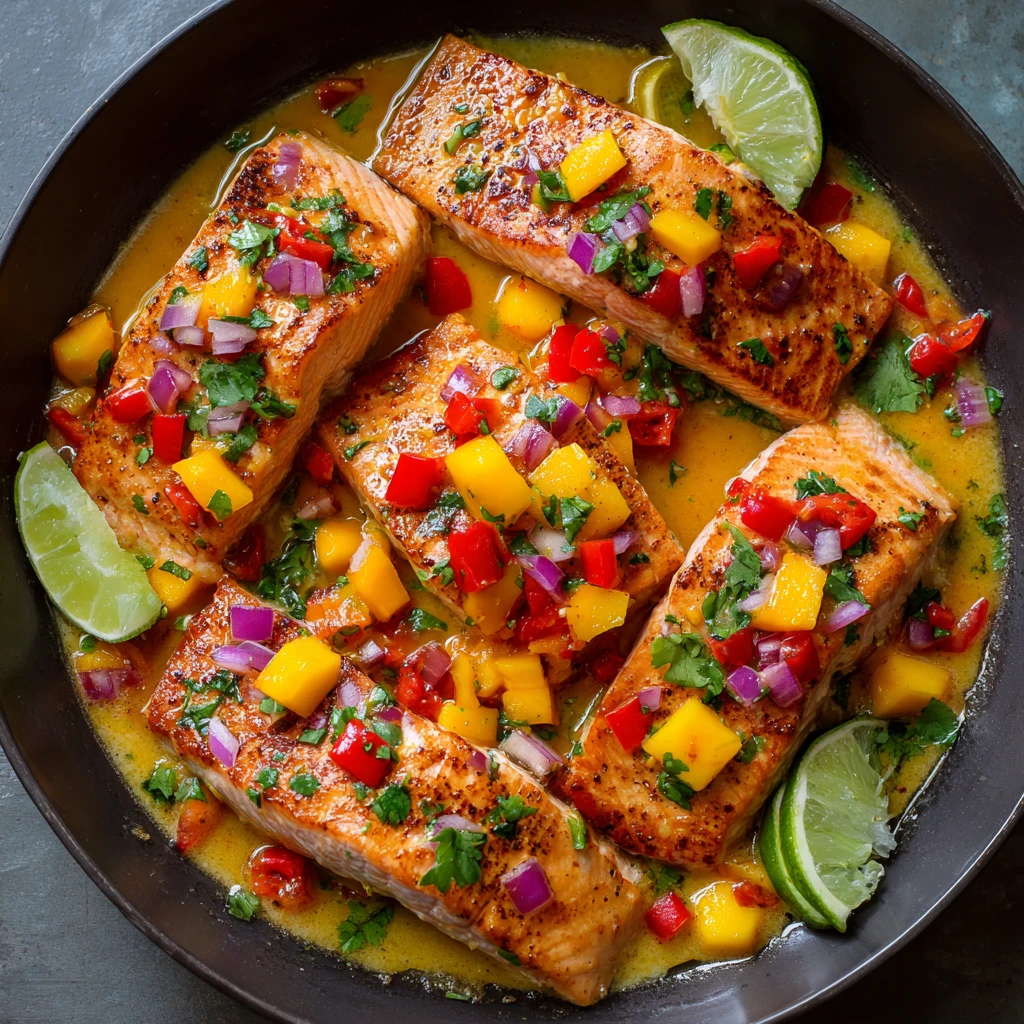
Arrange the salmon fillet on a plate and spoon any remaining salsa over the top.
Garnish with fresh cilantro and a lime wedge.
Serve immediately while the salmon is still warm.
A thoughtful presentation elevates the dining experience.
Variations and Substitutions
Flexibility is key in the kitchen.
Adjusting the Spice Level
If you prefer a milder dish, use a jalapeño pepper instead of a habanero. Or omit the pepper altogether and add a pinch of red pepper flakes.
For extra heat, add more habanero or a dash of your favorite hot sauce.
Taste the salsa before adding it to the salmon, and adjust the spice level to your liking.
Swapping Out Ingredients
Don’t have mango? Try using pineapple or papaya.
Red onion can be substituted with white or yellow onion.
If you don’t have fresh cilantro, parsley is a good alternative.
Feel free to experiment and make the recipe your own.
Grilling or Pan-Searing
While this recipe is designed for baking, you can also grill or pan-sear the salmon.
For grilling, preheat your grill to medium-high heat. Place the salmon on the grill, skin-side down (if using skin-on fillets), and cook for 4-6 minutes per side, or until cooked through.
For pan-searing, heat olive oil in a skillet over medium-high heat. Place the salmon in the skillet, skin-side down (if using skin-on fillets), and cook for 4-6 minutes per side, or until cooked through. Spoon the salsa over the salmon during the last minute of cooking.
Health Benefits of Salmon and Mango
This recipe is not only delicious, but it’s also packed with nutrients.
The Power of Salmon
Salmon is an excellent source of omega-3 fatty acids. These are essential for heart health and brain function.
It’s also a good source of protein, which is important for building and repairing tissues.
Salmon is rich in vitamins and minerals, including vitamin D, vitamin B12, and potassium.
The Goodness of Mango
Mangoes are loaded with vitamins and antioxidants.
They are a good source of vitamin C, which boosts the immune system.
Mangoes also contain vitamin A, which is important for vision and skin health.
They are a good source of fiber, which aids in digestion.
This Mango Habanero Salmon recipe is a healthy and delicious meal that you can feel good about eating.
Troubleshooting and Tips for Success
Even the best recipes can sometimes go wrong. Here are some tips to help you succeed.
Preventing Dry Salmon
The key to moist salmon is to avoid overcooking it.
Use an instant-read thermometer to check the internal temperature.
If your oven tends to run hot, reduce the cooking time slightly.
Brushing the salmon with olive oil before adding the salsa can also help to keep it moist.
Adjusting the Salsa Consistency
If the salsa is too thick, add a little more lime juice or olive oil to thin it out.
If it’s too watery, add more diced mango or red bell pepper to thicken it.
The salsa should have a chunky, but not overly liquid consistency.
Making it Ahead
The mango habanero salsa can be made ahead of time and stored in the refrigerator for up to 2 days.
However, it’s best to cook the salmon fresh for optimal flavor and texture.
If you’re short on time, you can prepare the salsa in advance and then simply bake the salmon when you’re ready to eat.
FAQ About Mango Habanero Salmon
Here are some frequently asked questions about this recipe:
Can I use frozen salmon?
Yes, you can use frozen salmon. Make sure to thaw it completely before cooking. Place it in the refrigerator overnight or use the cold water method for quicker thawing. Pat it dry before adding the salsa.
How do I know when the salmon is cooked?
The salmon is cooked when it flakes easily with a fork and the internal temperature reaches 145°F (63°C).
Can I make this recipe spicier?
Yes, you can add more habanero pepper or a dash of your favorite hot sauce to the salsa. You can also leave some of the habanero seeds in for extra heat.
Can I use a different type of fish?
Yes, you can substitute other types of fish, such as tuna, mahi-mahi, or cod. Adjust the cooking time accordingly.
What can I serve with this salmon?
This salmon pairs well with quinoa, rice, roasted vegetables, black beans, or a simple salad.